Case study
SDIP: a launch website that shows its proof
SDIP is an open-source product of KLCube Network, created and maintained by Zahid Aramai. It converts SEG-Y seismic data to chunked Zarr arrays and issues an Equivalence Certificate, a machine-checkable proof that nothing changed. Its launch website had to convince sceptical engineers in seconds, so it tells the story in five scroll beats and then lets them check the proof themselves.
- Client
- SDIP
- Industry
- Seismic data software
- Location
- Kuala Lumpur, Malaysia
- Year
- 2026

The goal
Show the file plus its proof within a few seconds, to visitors who distrust marketing, and lead them to the code. Every claim on the page had to be checkable.
My role
Brief, honesty rules, visual identity, the 3D scroll story and its still frames, the in-browser certificate check, the demo, build, testing and launch.
What was built
- Launch website with one clear action: open the code
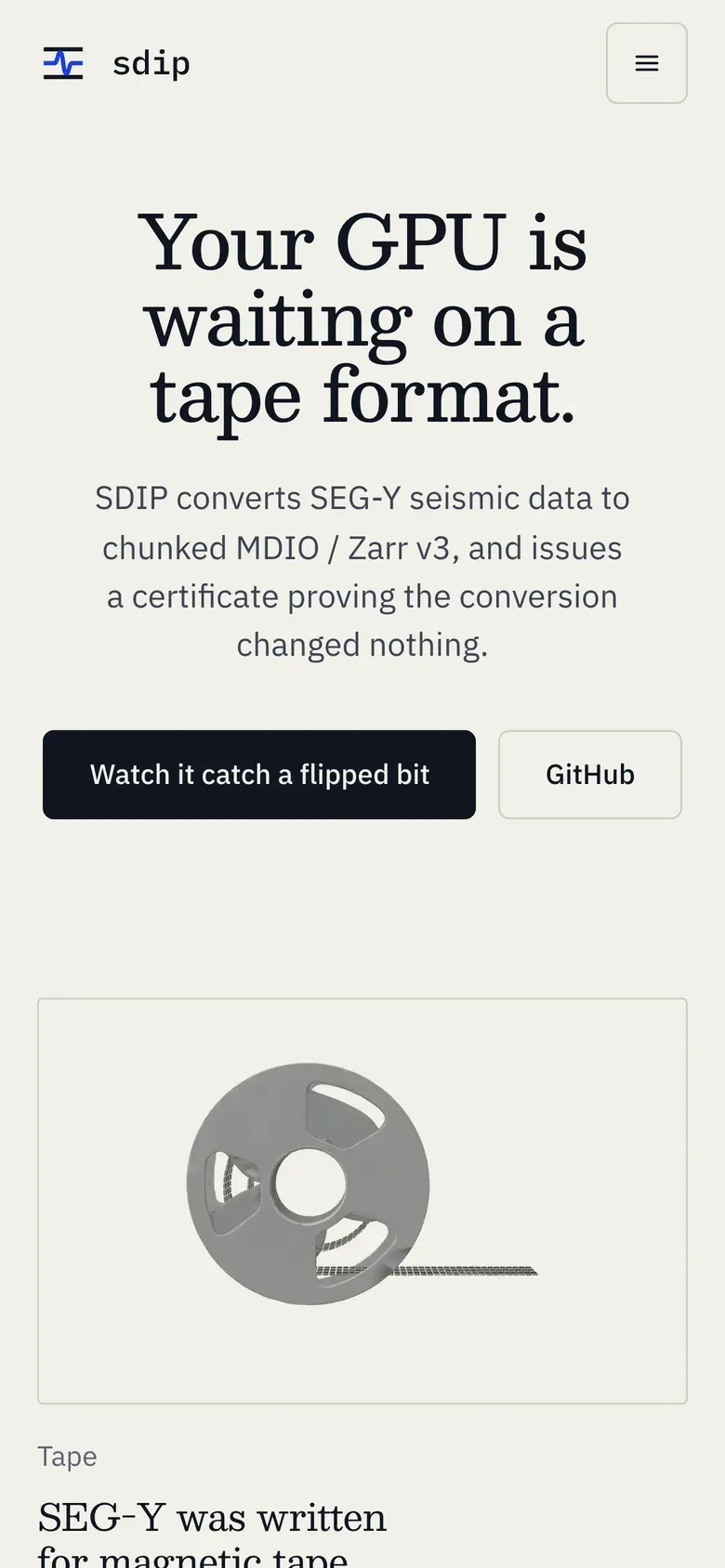
- A five-beat 3D scroll story, with still frames for phones and reduced motion
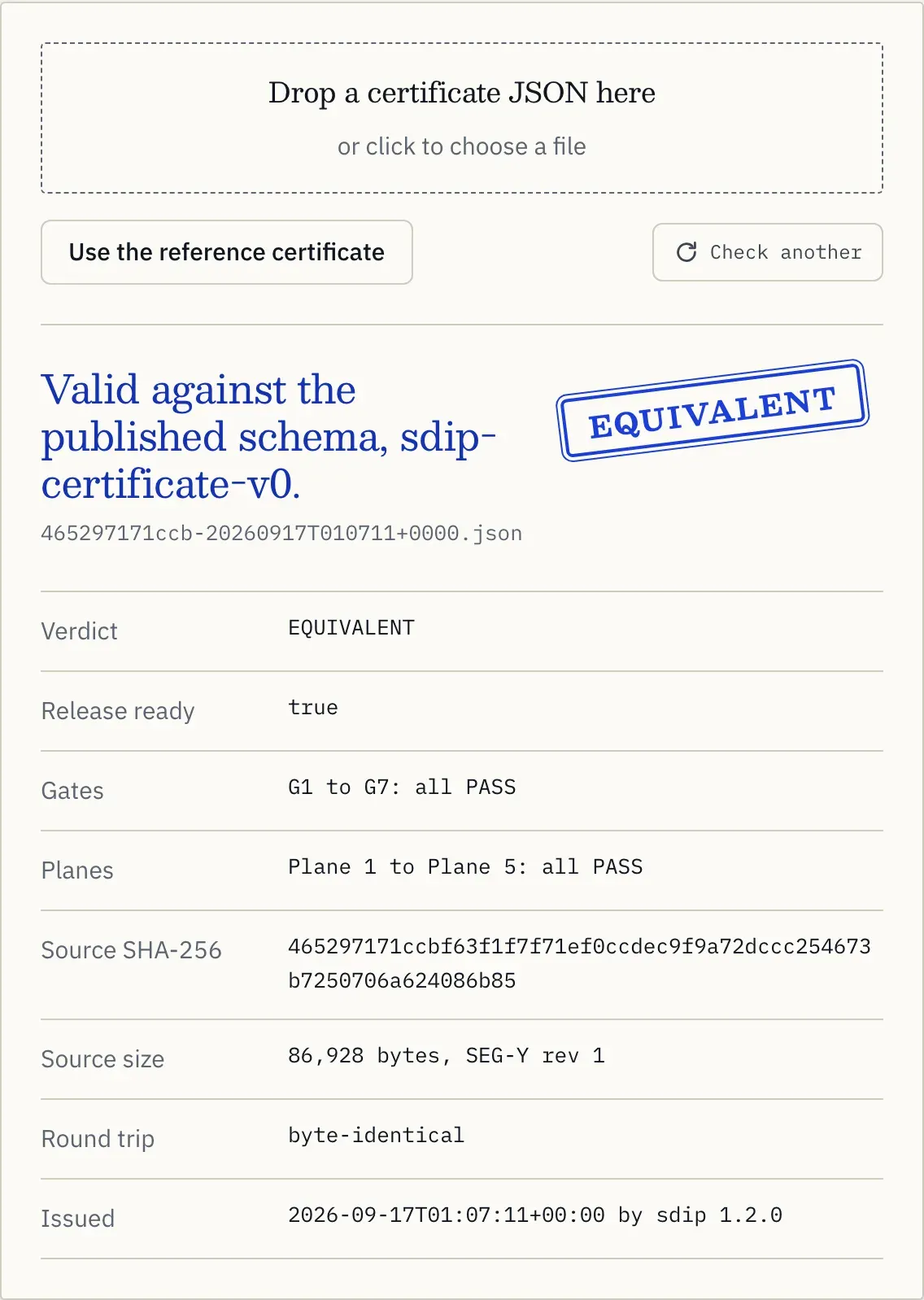
- Certificate check that runs in the browser, offline, against the published schema
- Scripted demo of a certificate passing, and of one flipped bit failing
- Guide, certificate, changelog and author pages
The scroll story
One object, five beatsfrom a tape reel to a proof.
On a capable screen the first view is a 3D scene that changes as you scroll. Phones that cannot keep it smooth, and visitors who ask for less motion, get these five still frames with the same captions.
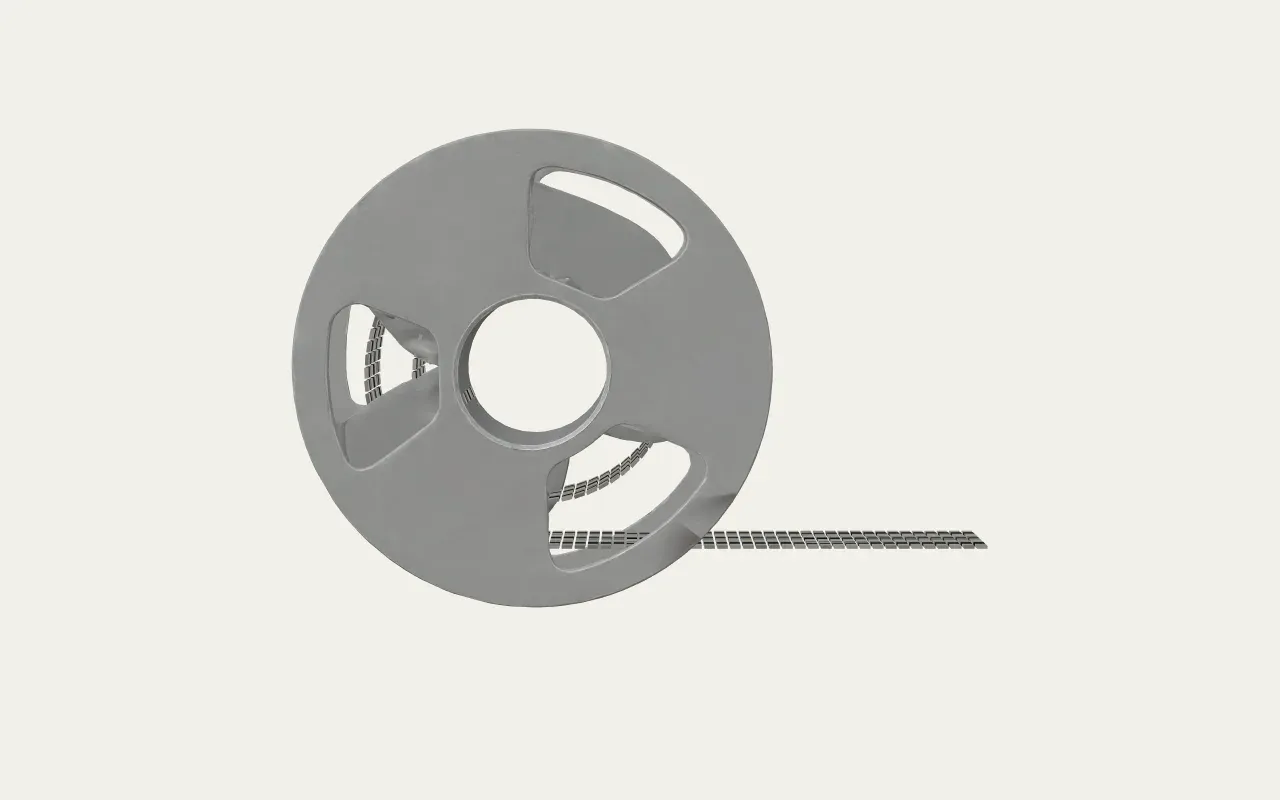
01 · TapeSEG-Y was written for magnetic tape. 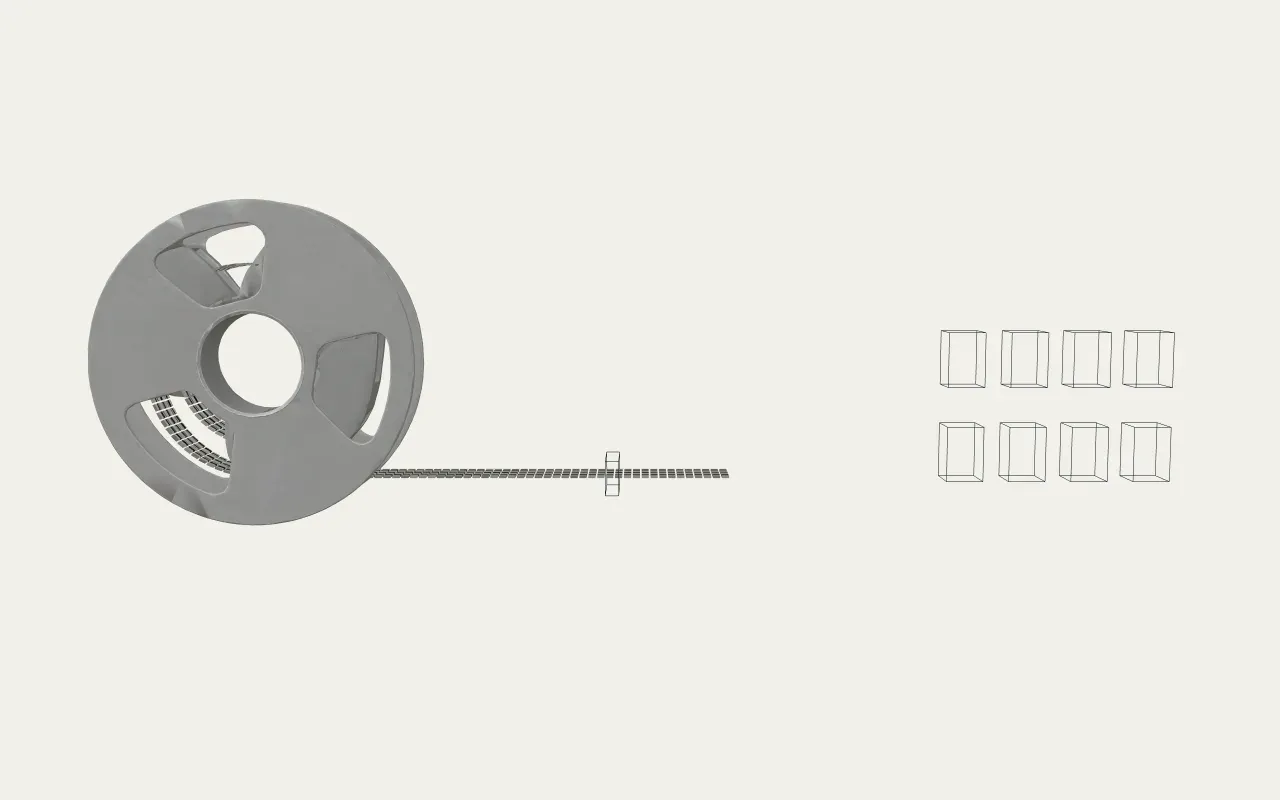
02 · StarveIt reads in order. Training waits. 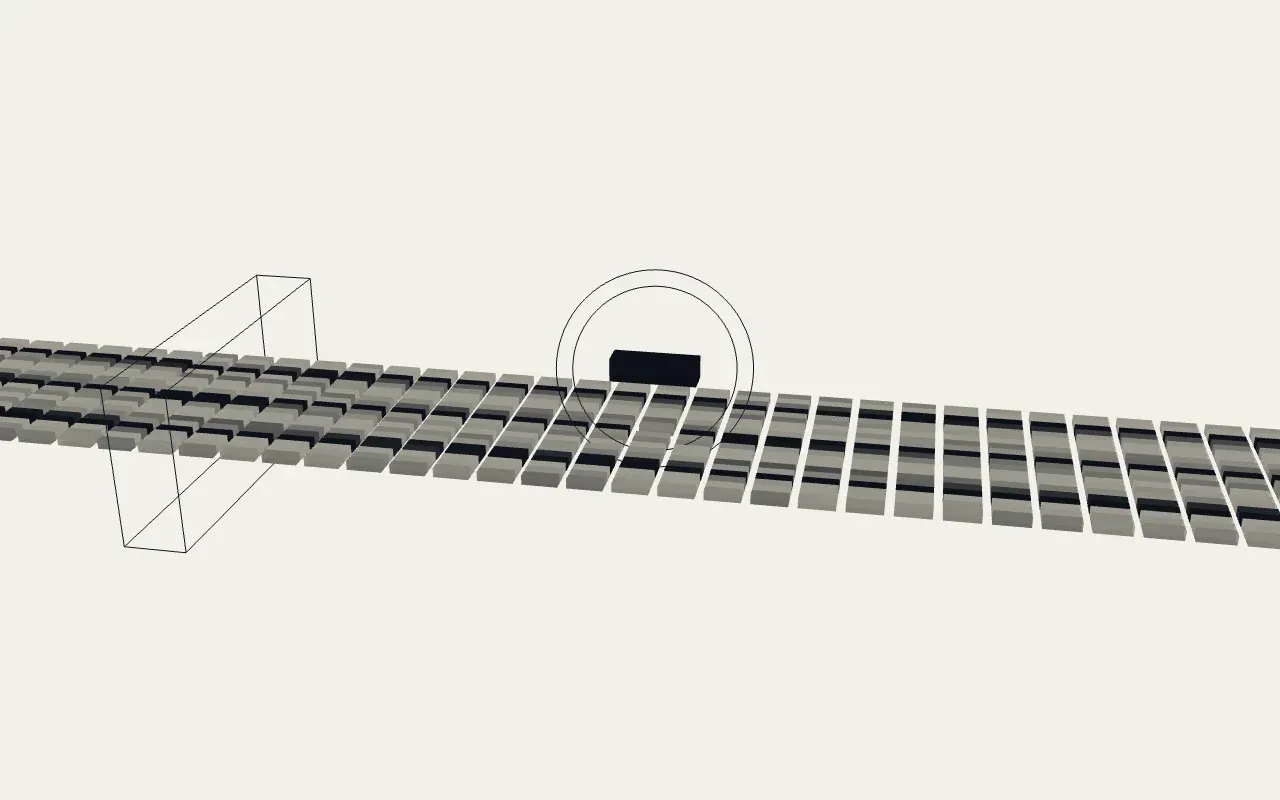
03 · BreakConverting it is where data quietly breaks. 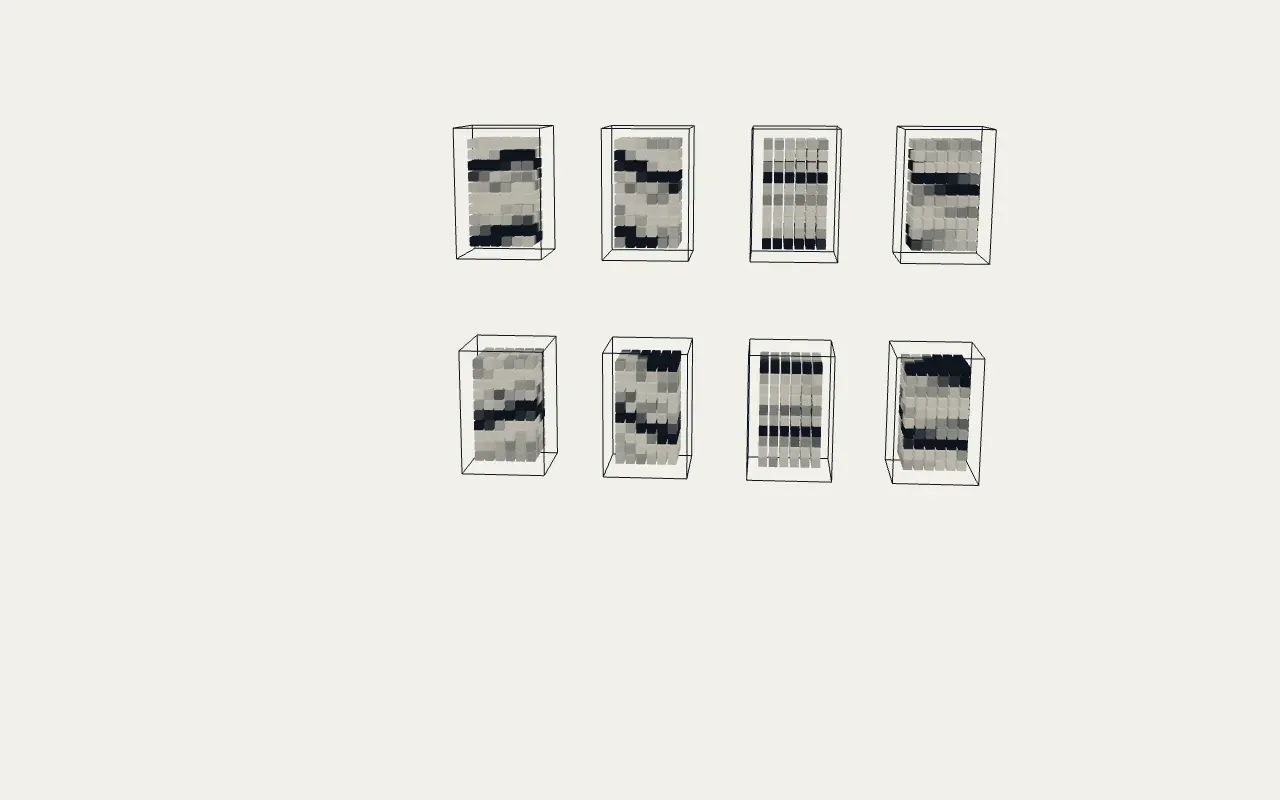
04 · ChunkSDIP rewrites it as chunked Zarr arrays. 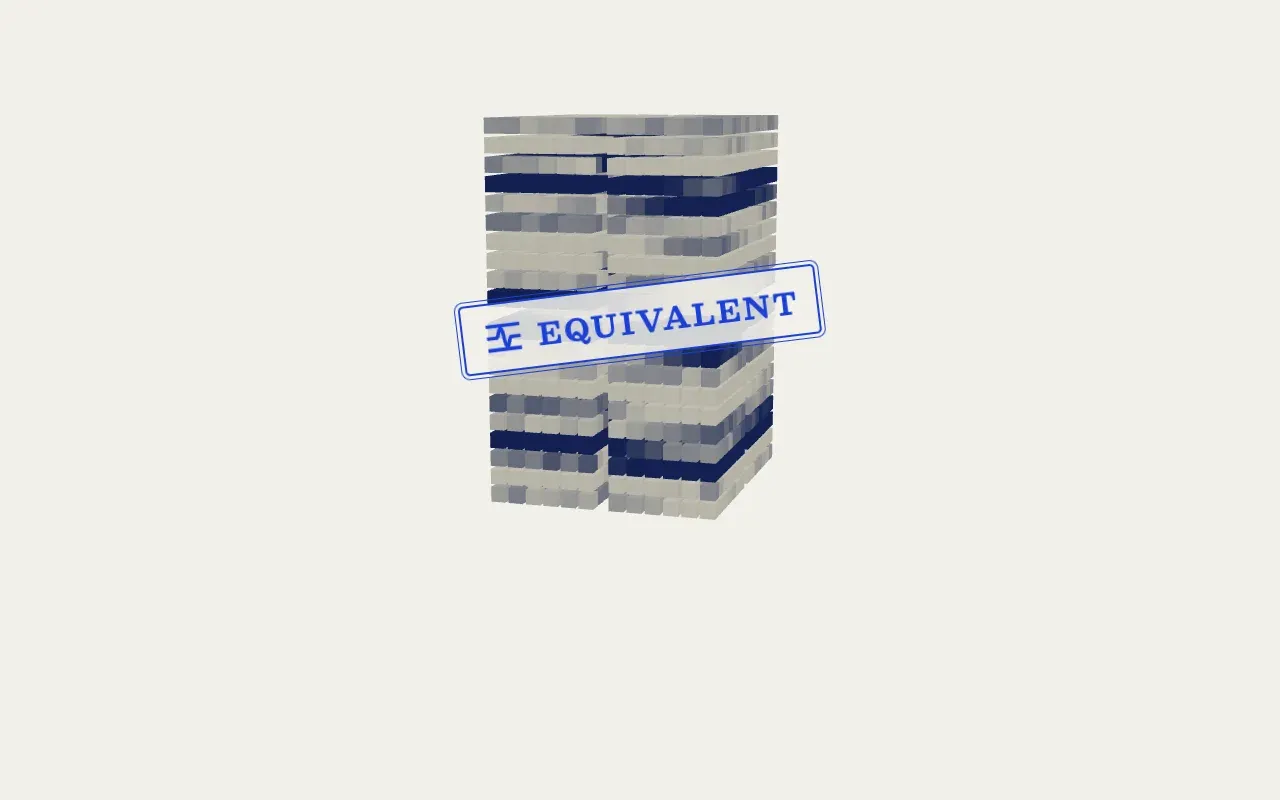
05 · ProveFive planes compared. Not one bit moved.
Scripted illustration, not a live run or a measurement.
How it was done
Eight decisionsfor a sceptical visitor.
- 01
Write the brief
The visitors are geophysicists, seismic data engineers and machine learning engineers, sceptical by trade. The page has one job: in a few seconds, show the file plus its proof, then lead to the code.
- 02
Write the honesty rules first
Every number comes from a published certificate or the project's own documentation. No speed claims until a measurement exists, no comparison with other tools, and the animated scene is labelled as an illustration.
- 03
One visual idea
The product's output is a record, so the page looks like one: ledger paper, blue-black ink, a stamped-record typeface, and parts drawn as documents (a printout, a certificate, a seismic section) instead of cards.
- 04
One colour with one meaning
Cobalt blue means proven. It appears only on a passing certificate, a valid check and links under the pointer. Failure is shown in black ink, never in a second colour.
- 05
Research
Four award-winning websites were studied for how one object can carry a whole scroll and where a caption should sit. Nothing was copied; each idea taken is written down with its source.
- 06
A story in five beats
One 3D object of 3,360 cells is transformed through five beats and never replaced: from a tape reel to a sealed, proven volume. Blue appears only in the last beat.
- 07
Let the visitor check
A visitor can drop a certificate on the page and have it checked in the browser against the published schema. The file is never uploaded, and the check still works with the network off.
- 08
Test in real conditions
Six pages at six screen widths, a slow-device and reduced-motion fallback to still frames, a phone app browser that broke the scene (found, fixed and re-tested on a real phone), and a sweep for empty gaps in every layout.
References: RÜPAL (Rückerl Paletten), Neuroform, Cerebrium and Clinia, studied for structure and motion only.
The proof, on the page
Pass, break,then check it yourself.
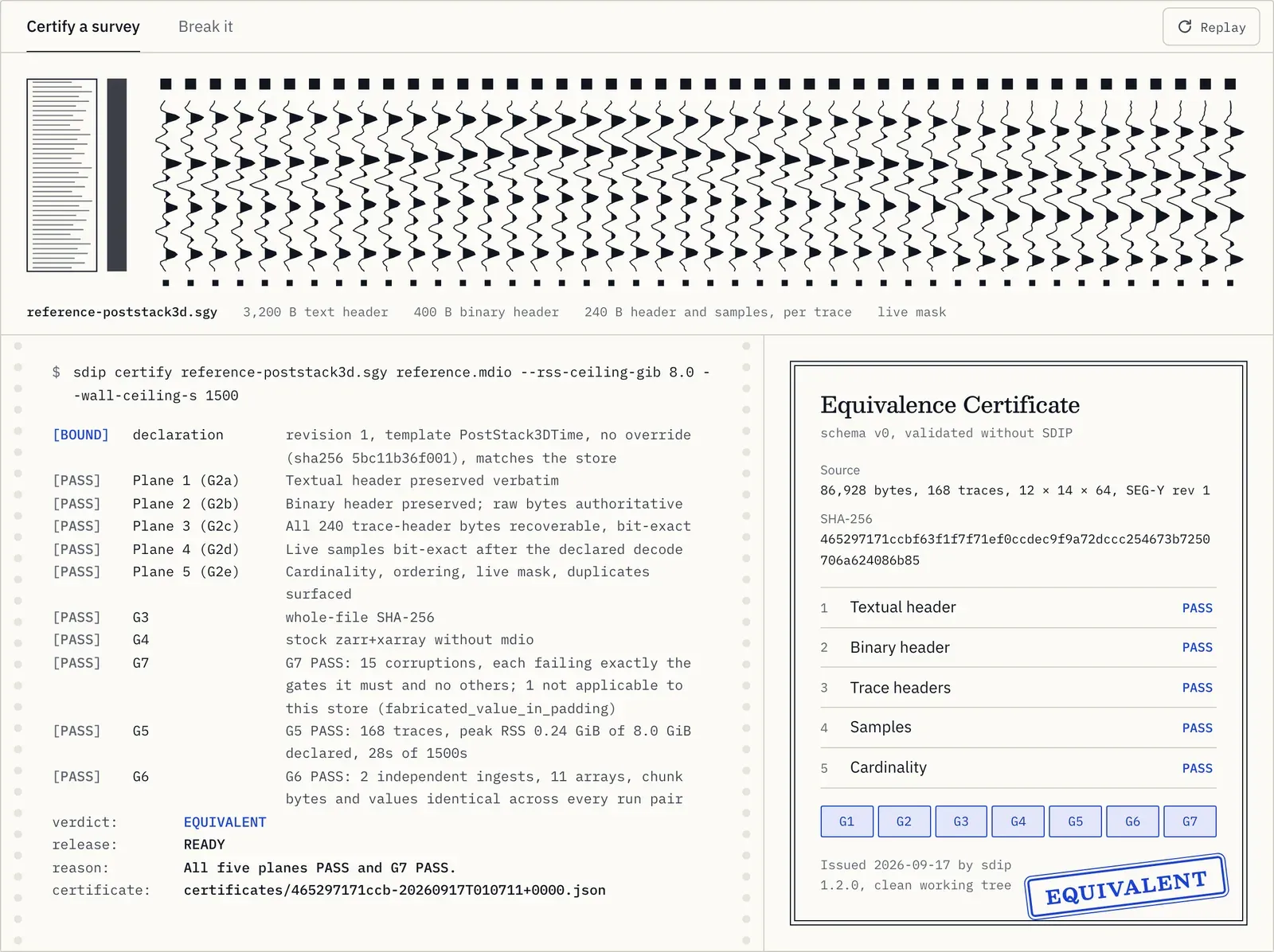
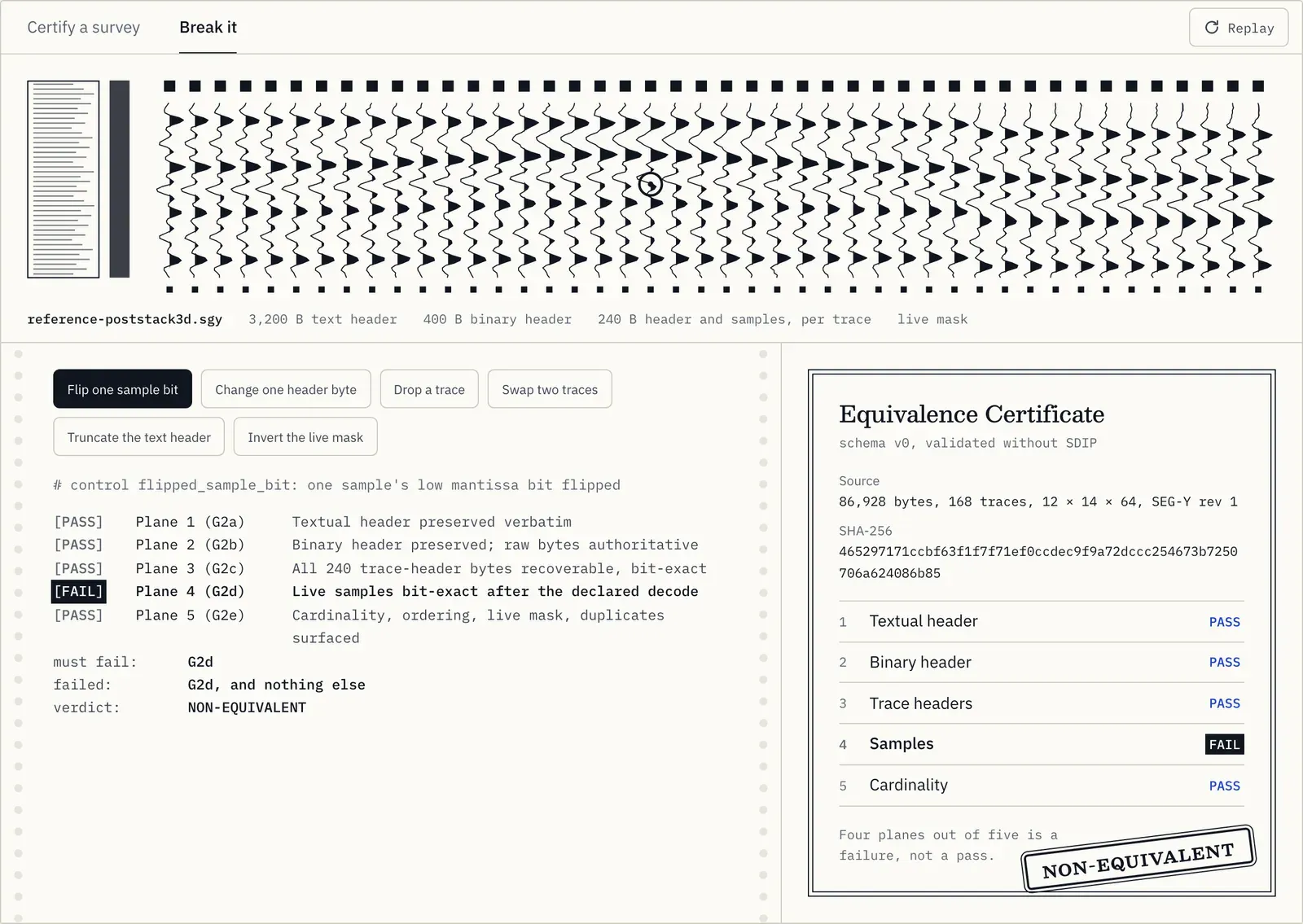
A check the visitor runs
A certificate is a document with a published schema. Drop one on the page and it is checked in the browser: the file is never uploaded, and the check keeps working with the network off. The page says plainly what the check does not do.
Checked before launch
Every page was opened in a real browser at six widths, then again with motion reduced, on a slow device profile and with the network off. A fault found in a phone app's browser was fixed and re-tested on a real phone.
| Screen widths tested | 375, 768, 1024, 1280, 1440 and 1920 px |
|---|---|
| Sideways scrolling | None, on every page |
| Page speed score, phone | Performance 100, accessibility 100 |
| Main content shown, phone | 1.0 s |
| Reduced motion or a slow device | Five still frames with the same captions |
| Network off after loading | The certificate check still works |
| Phone app browser | Scroll fault found, fixed, re-tested on a real phone |
Let's get in touch
Tell me about your project
Send your business name and what you need. I reply on WhatsApp within one working day with a written quotation.
Message Zahid directly
- +60 11-5197 8879
- Hours
- Monday to Saturday 10 am to 6 pm · Sunday closed
- Based in
- Kuala Lumpur, Malaysia
Send three things for a quote in one reply
- 01Your current website, if you have one
- 02What the website must do for your business
- 03When you need it live